|
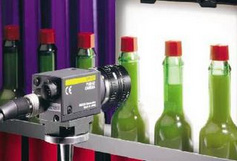
The advantages of using machine vision for the position detection of bottled liquidsTime:2015-11-24 As one of the most crucial dimensions that restrict the quality of beverages, the liquid level filling of beverages usually becomes the factor that buyers pay the most attention to. "It is not the quantity but the unevenness that matters." For the same product, even a slight difference in the liquid level can cause a serious psychological gap for buyers. This phenomenon is more directly manifested in high-end beverages. Therefore, the liquid level detection during the beverage filling process has always been a concern for major manufacturers. Traditional liquid level detection is mostly contact measurement: labor-intensive manufacturers may use manual comparison and other methods, while technology-intensive manufacturers may use air-blowing detection, which uses air pressure feedback for liquid level detection. These two methods have their advantages in specific environments. However, in addition to the detection deviations caused by the inspectors themselves, contact measurement can also lead to contamination of beverages or stains on the bottle body, ultimately resulting in a decline in product quality or a decrease in the pass rate of other dimensions of the product, causing waste of resources or a poor customer experience. The bottle cap liquid level inkjet coding detection system based on machine vision technology provides the latest solution for achieving automated detection of the liquid position in bottles. The bottle cap liquid level inkjet coding detection system fully takes into account the particularity of the beverage filling site. It applies non-contact visual detection technology to detect the liquid position in the bottle. It can not only complete the detection task at high speed, high efficiency and high precision, but also minimize unnecessary pollution and wear.
This system can be used to detect the liquid level difference during the beverage filling process. For beverages with non-compliant liquid levels, it promptly feeds back to the electrical PLC to control the defective product rejection unit for removal. The advantages of this system lie in its high detection accuracy, fast processing speed, good stability, the ability to automatically remove defective products from each workstation, and its simple, quick and convenient operation. |